Strasbourg, a minting city
For more than five centuries, coins were struck in Strasbourg: first by the city itself, then for the kings of France and the regimes that followed, until 1870. Many still carry the city's mark: the lily, then the two letters BB.
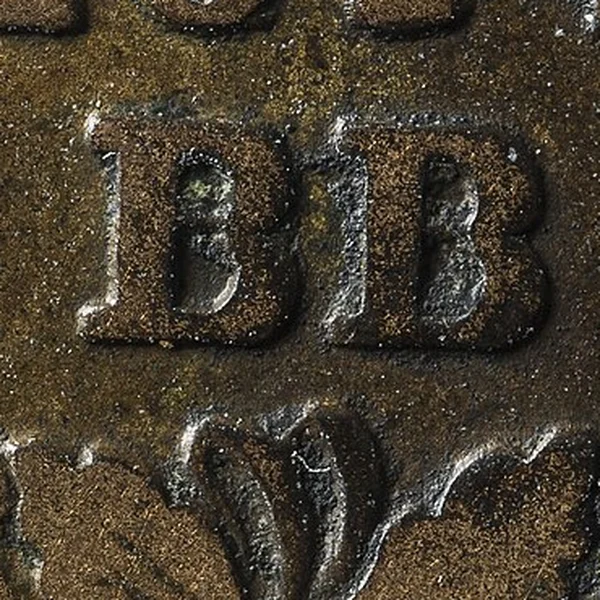
BB, the signature of Strasbourg
Under the Ancien Régime and into the 19th century, France had several mints. Each marked its coins with a letter, so that people knew where they had been struck. Paris had the A; Strasbourg, a late arrival in the kingdom, received the two letters BB.
This letter can be read without any tools, with a simple loupe. On royal écus, it is on the reverse, below the crowned shield. On the 20 francs gold coins of the Second Empire, it is just before the date. On other coins, it is on the obverse, near the rim.
Two coins of the same type and the same year can be very different depending on the mint: some year and mint combinations were struck in small numbers. That is why the letter matters so much to a numismatist.
| Letter | Mint |
|---|---|
| A | Paris |
| BB | Strasbourg |
| B | Rouen |
| D | Lyon |
| K | Bordeaux |
| MA | Marseille |
| W | Lille |
| T | Nantes |
| H | La Rochelle |
| Q | Perpignan |
Coins struck in Strasbourg
-
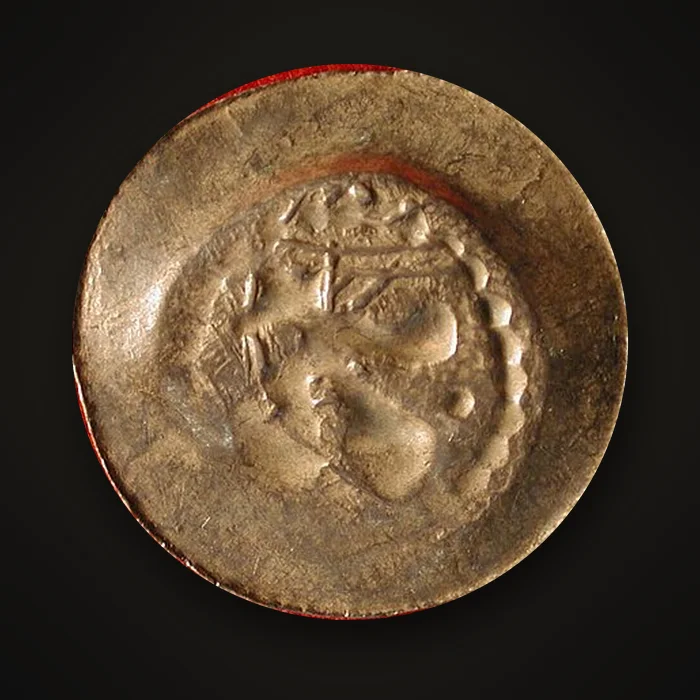
Photo: Bibliothèque nationale de France (Gallica), public domain, via Wikimedia Commons, cut out on a black background. 14th-15th centuryThe city's lily deniers
Small silver coins without a legend, struck in the name of the city. The Strasbourg lily fills the whole surface: it is the first sign to look for on a Strasbourg coin.
-
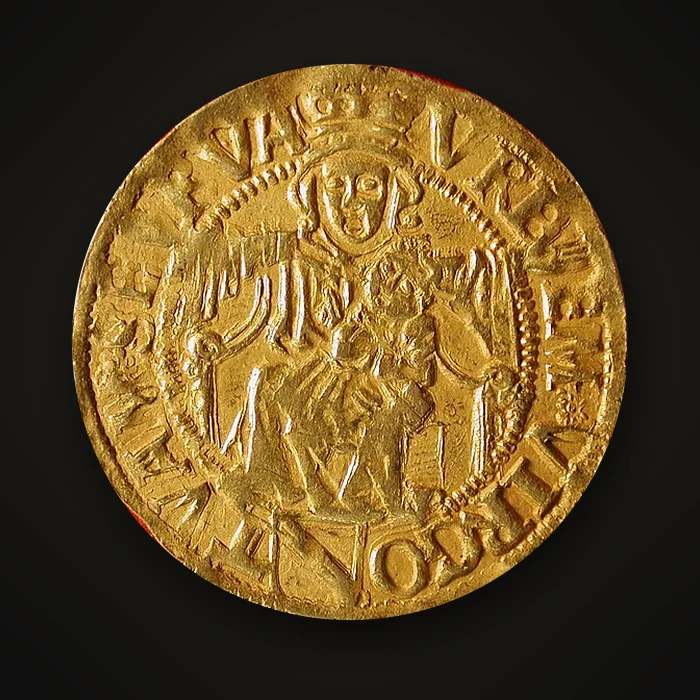
Photo: Bibliothèque nationale de France (Gallica), public domain, via Wikimedia Commons, cut out on a black background. 1508-17th centuryThe gold florin with the Virgin
The city also struck gold: florins (“Goldgulden”) showing the Virgin and Child, patron of the cathedral, with a globe topped by a cross on the reverse.
-
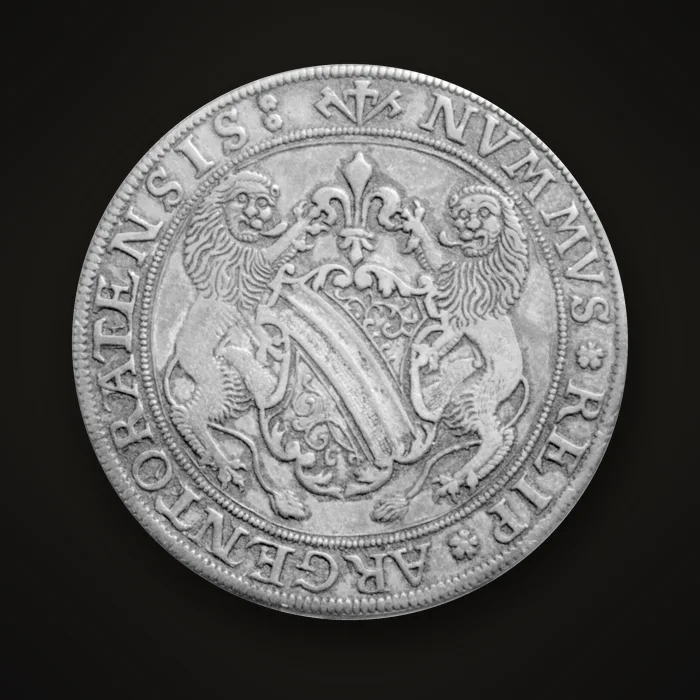
Photo: The Metropolitan Museum of Art, CC0, via Wikimedia Commons, cut out on a black background. 16th-17th centuryThe thalers with two lions
Large silver coins of the Free Imperial City: two lions hold the Strasbourg shield with its bend, below the lily. The Latin legend names the city “Argentoratensis”.
-
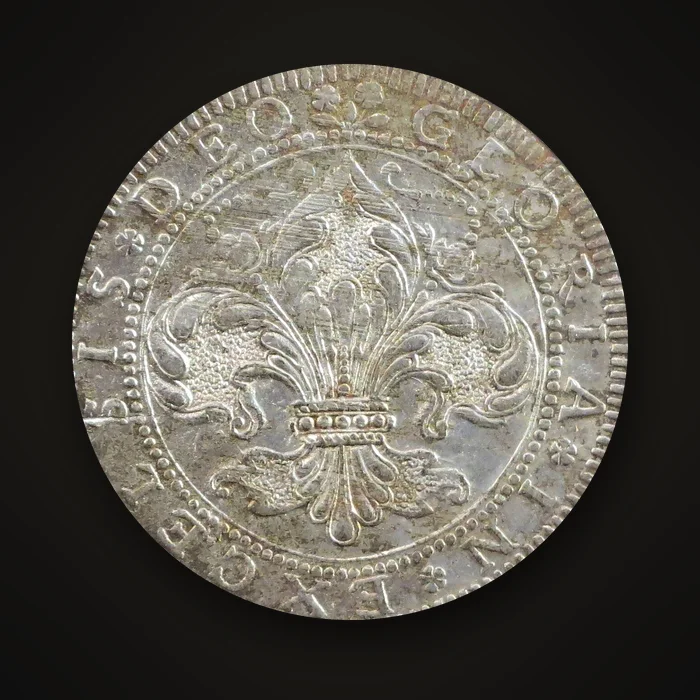
Photo: Tangopaso, public domain, via Wikimedia Commons, cut out on a black background. after 1668The 60 kreutzer gulden
The city's last major coin before it became French: a lily in full bloom on the obverse, the city arms on the reverse.
-
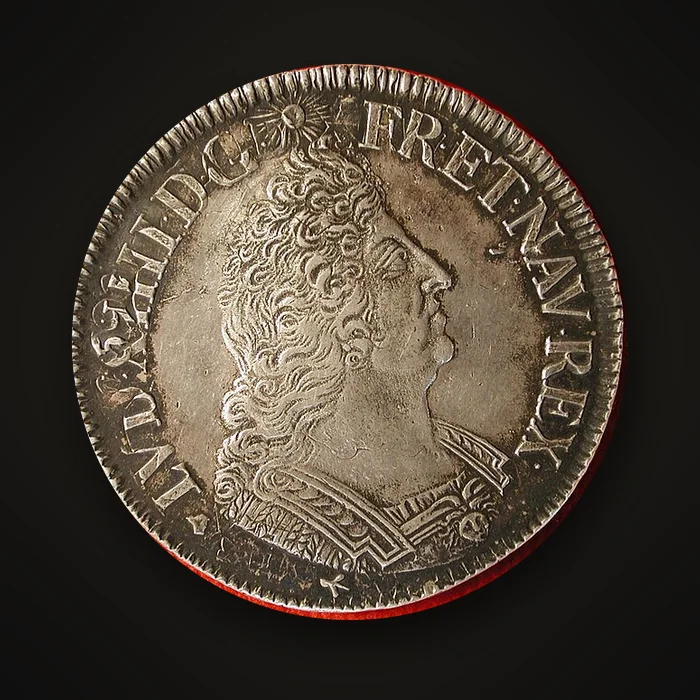
Photo: Bibliothèque nationale de France (Gallica), public domain, via Wikimedia Commons, cut out on a black background. 1694The royal mint and the letters BB
Strasbourg became French in 1681. A royal mint was set up there and marked its coins with the two letters BB. Here, an écu of Louis XIV struck in Strasbourg.
-
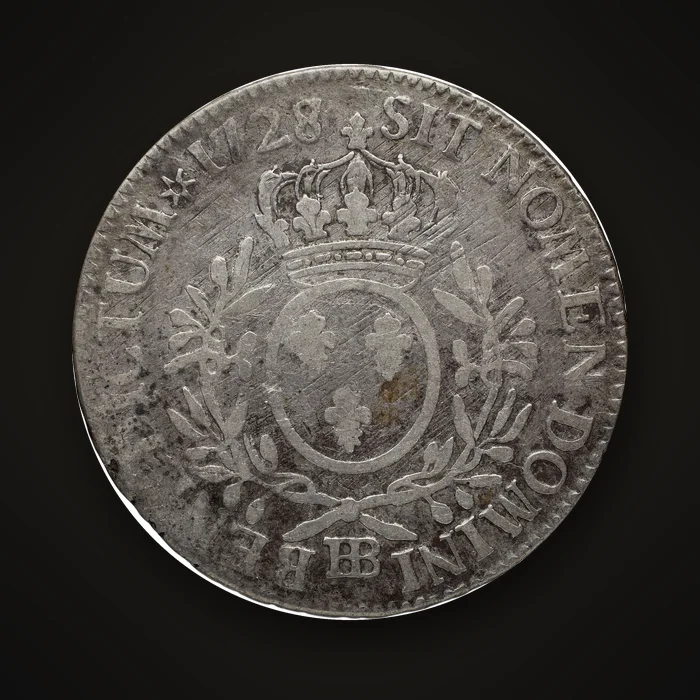
Photo: Bibliothèque nationale de France (Gallica), public domain, via Wikimedia Commons, cut out on a black background. 1728The écu of Louis XV
On the reverse, below the crowned shield of France, the two letters BB are clearly visible. Écus and their fractions came out of the Strasbourg mint in large numbers in the 18th century.
-
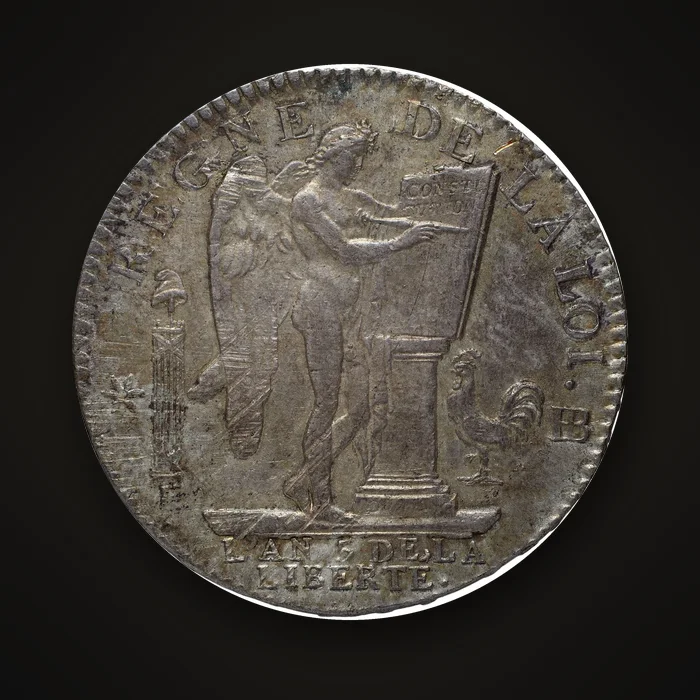
Photo: Bibliothèque nationale de France (Gallica), public domain, via Wikimedia Commons, cut out on a black background. 1793The constitutional écu
During the Revolution, the Genius engraves the Constitution on the reverse. The letter BB is on the right, next to the rooster.
-
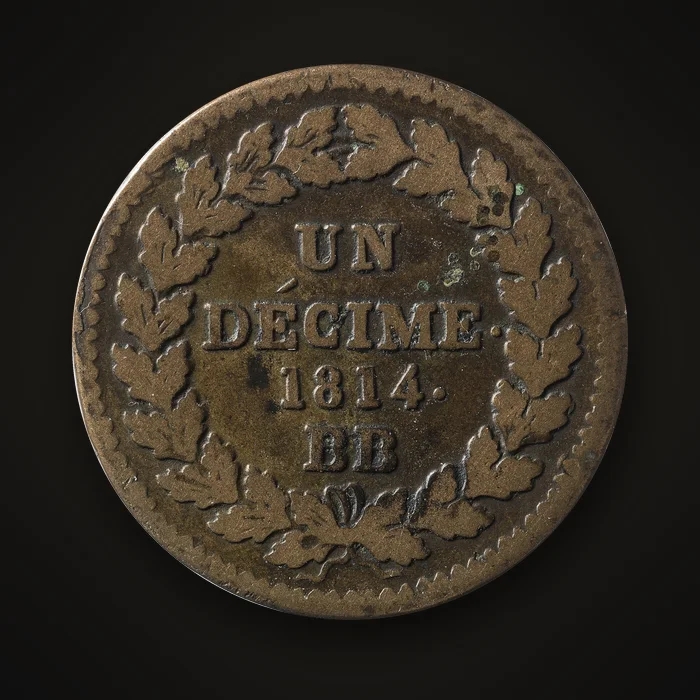
Photo: Musée Carnavalet, Paris Musées, CC0, via Wikimedia Commons, cut out on a black background. 1814-1815The blockade décime
During the blockade of the city in 1814 and 1815, the mint struck one-décime coins in bronze, with Napoleon's N and then the L of Louis XVIII. A typically Strasbourg coin.
-
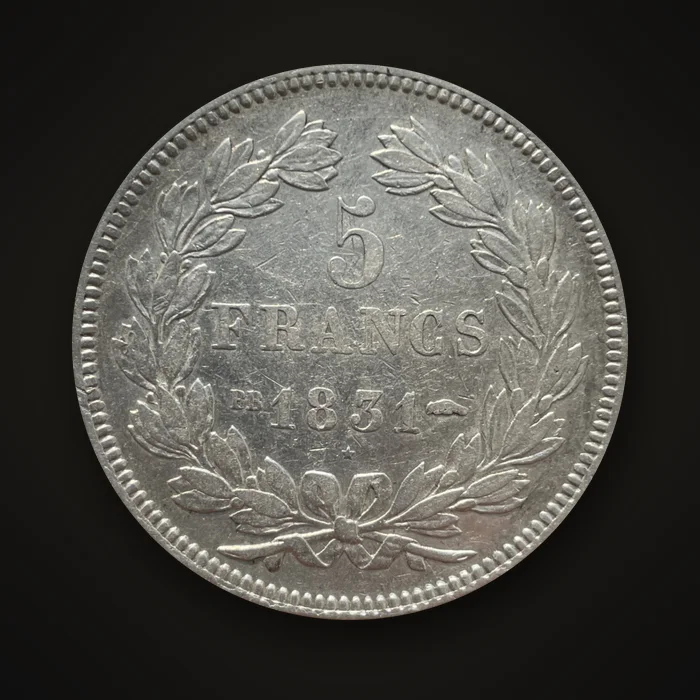
Photo: Windrain, CC0, via Wikimedia Commons, cut out on a black background. 1831The 5 francs écus
In the 19th century, Strasbourg struck silver 5 francs écus for each regime. This one dates from the reign of Louis-Philippe.
-
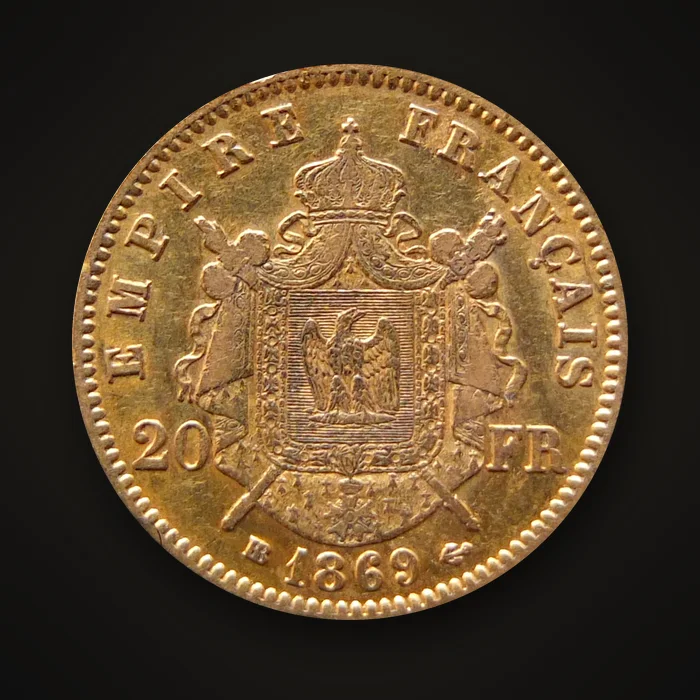
Photo: Siren-Com, CC BY-SA 4.0, via Wikimedia Commons, cut out on a black background (adapted under the same licence). 1869The 20 francs gold BB
The 20 francs gold coins of Napoleon III struck in Strasbourg carry BB on the reverse, just before the date.
-
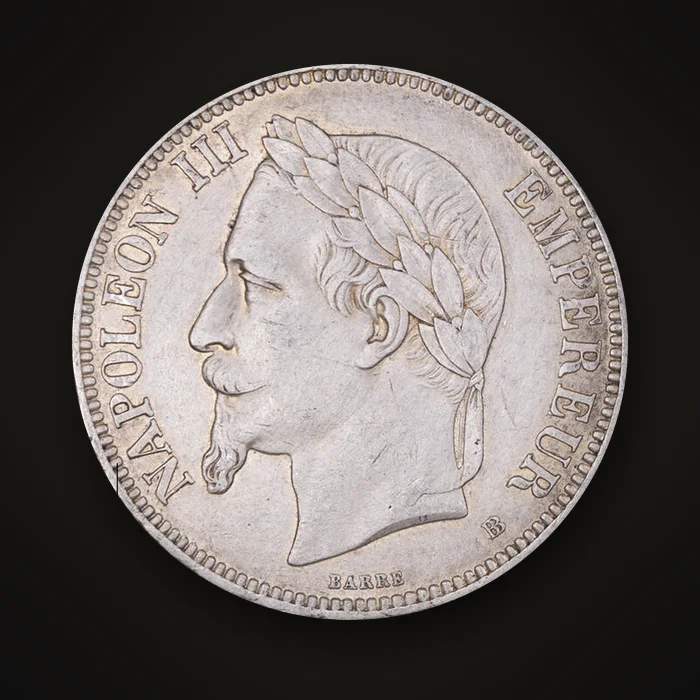
Photo: Windrain, CC BY-SA 4.0, via Wikimedia Commons, cut out on a black background (adapted under the same licence). 1870The last strikes
The siege of 1870 put an end to the mint. This Napoleon III 5 francs écu is among the very last coins struck in Strasbourg.
1871-1918: Alsace and the mark
After the war of 1870, Alsace was annexed to the German Empire and the Strasbourg mint did not reopen. People now paid in marks: 20 and 10 marks in gold, 2, 3 and 5 marks in silver, small change in nickel and copper. These coins came from the German mints and carry their letter: A for Berlin, D for Munich, F for Stuttgart, G for Karlsruhe.
Many stayed in families after the return to France in 1918. That is why, in Alsace, you still find boxes today where BB écus, napoléons and marks are mixed together. See the German coins (in French)
Coins linked to Strasbourg
- Coins of the city of Strasbourg (in French)
- Royal silver écus (in French)
- 5 francs silver écus (in French)
- 20 francs gold, Napoleon III
- 20 marks gold (in French)
- Silver marks of the German Empire (in French)
Frequently asked questions
Where can I find the mint mark on my coin?
It depends on the type. On royal écus, it is on the reverse, below the shield of France. On the 20 francs gold coins of the Second Empire, it is on the reverse, just before the date. On other coins, it is on the obverse, near the rim or below the bust. A loupe is enough.
My coin is marked “BB”: is it necessarily rare?
No. The Strasbourg mint struck large quantities in some years. Rarity depends on the combination of year, mint and condition of the coin. That is what we check during a valuation.
Are the Strasbourg lily and the royal fleur-de-lis the same thing?
No. The city's lily is a flower in full bloom, with stamens between the petals. The fleur-de-lis of the kings of France is stylised, with three petals joined by a band. On a coin, the open lily almost always stands for the city.
Does the Strasbourg mint still exist?
No. It closed in 1870. After Alsace was annexed to the German Empire, mark coins were struck in German mints (Berlin, Munich, Stuttgart, Karlsruhe…), never in Strasbourg.
Were the mark coins found in Alsace struck in Strasbourg?
No. They carry the letter of their German mint: A for Berlin, D for Munich, F for Stuttgart, G for Karlsruhe, for example. They are common in Alsatian families because people paid in marks there from 1871 to 1918.